Produce Books for Immersion Purposes
I recently wrote an article about immersing oneself in a healthful life, kind of like one does when they go to an immersion school, or a foreign country to learn a language. I wanted to talk a little more in depth about several books that I am “working with” right now. I say this because the first three books are children’s books. And yes, I did use the first book to help categorize produce in the project my husband and I are doing, “A Ton of Produce,” but mainly the children’s books are used to educate my daughter. I hope that if she regularly sees new and different types of produce that she will recognize them and be interested in trying it.
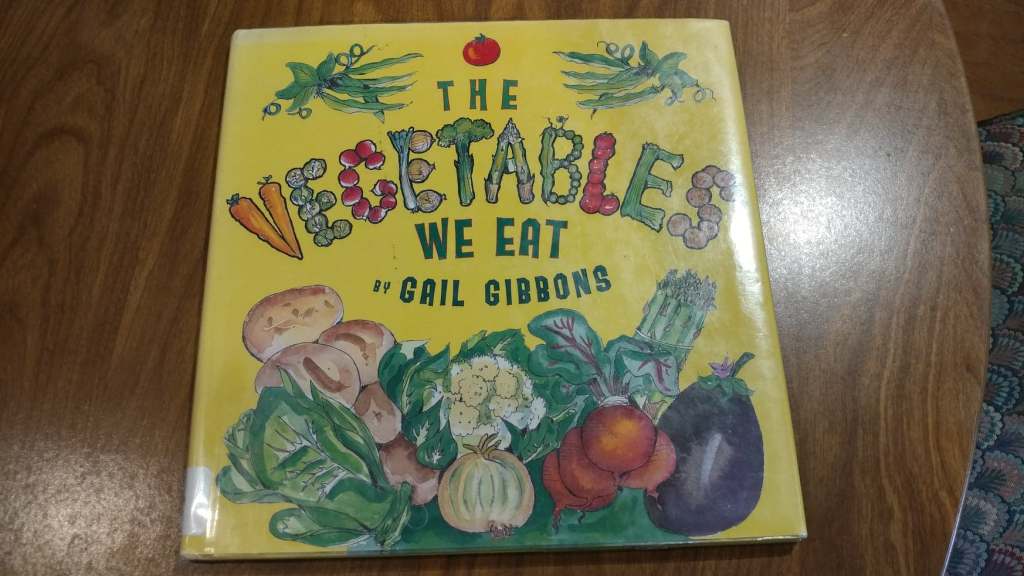
I found this book while looking through the non fiction section at our library. I have read Gibbons’s Dinosaur and Horse book to my daughter, so when I saw this, I knew it was going to be informative. Gibbons does a good job at breaking the subject down into categories which then makes explaining the subject to a child that much easier. Catawba-Lynn, my daughter, happily sits through these books, pointing out the vegetables and participating in answering questions as I think of them.
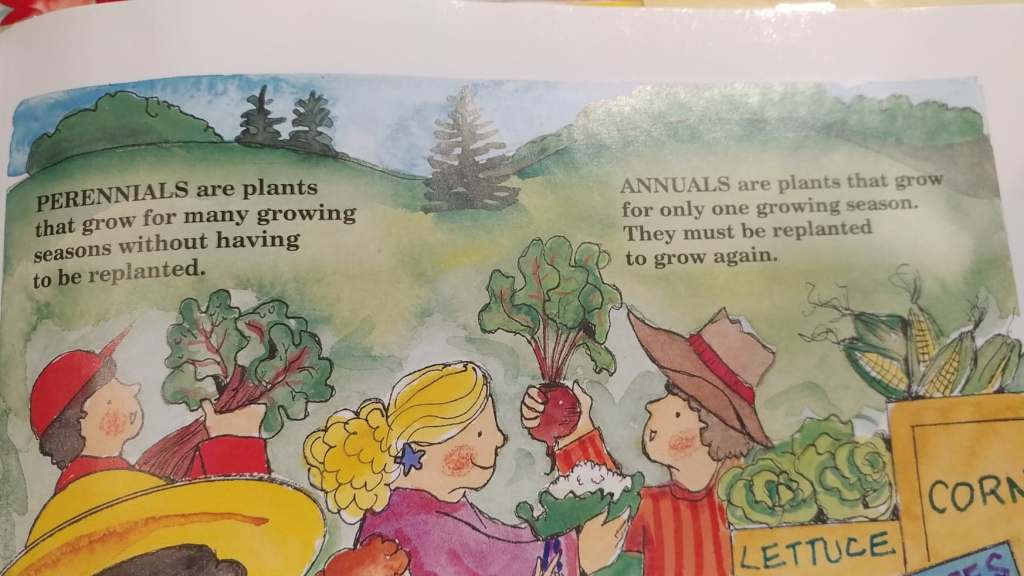
I feel like I need to save this picture in my phone. I can never remember these two terms. This is the first topic touched upon in this book. More than half the book is the different categories of the vegetables.
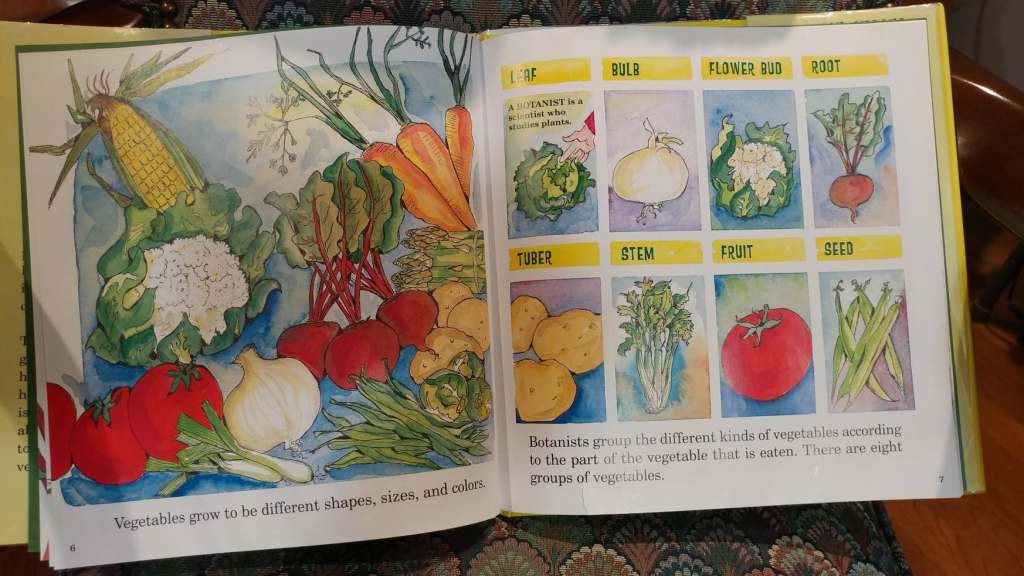

Each category explains where the edible part of the vegetable grows or what part of the vegetable is eaten. Gibbons shows a common vegetable, such as the White Spanish Onion, and follows with other vegetables in the same group, so for bulbs it would be Yellow Globe Onion, Red Globe Onion, Sweet Vidalia Onion, Leeks and Scallions.
The next two books are board books for young children. I borrowed these from our library as well, and have taken them out several times because the produce pictured is really quite amazing.
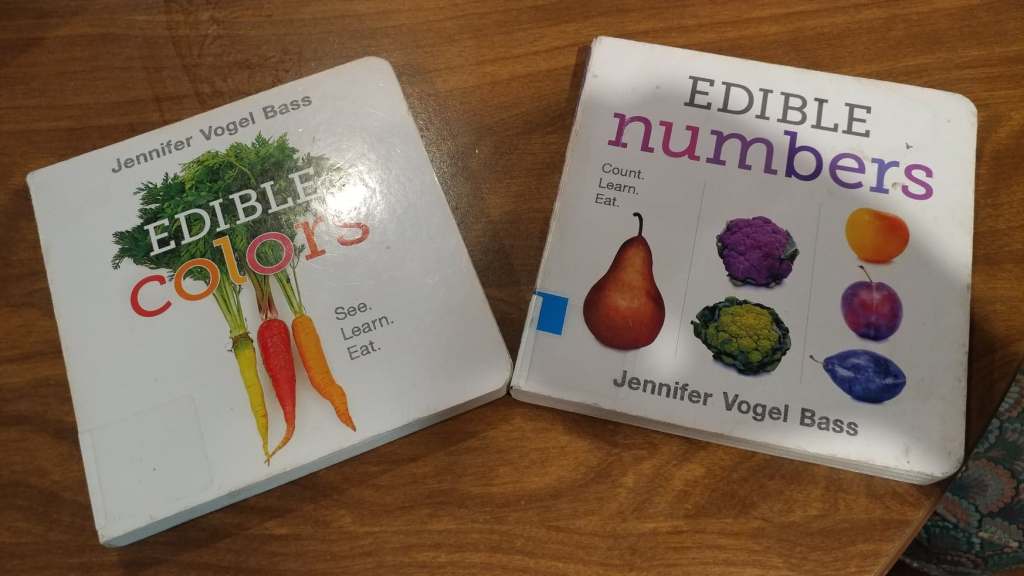
Very simple, the book is laid out to teach children counting and colors by showing pictures of vividly colorful produce.
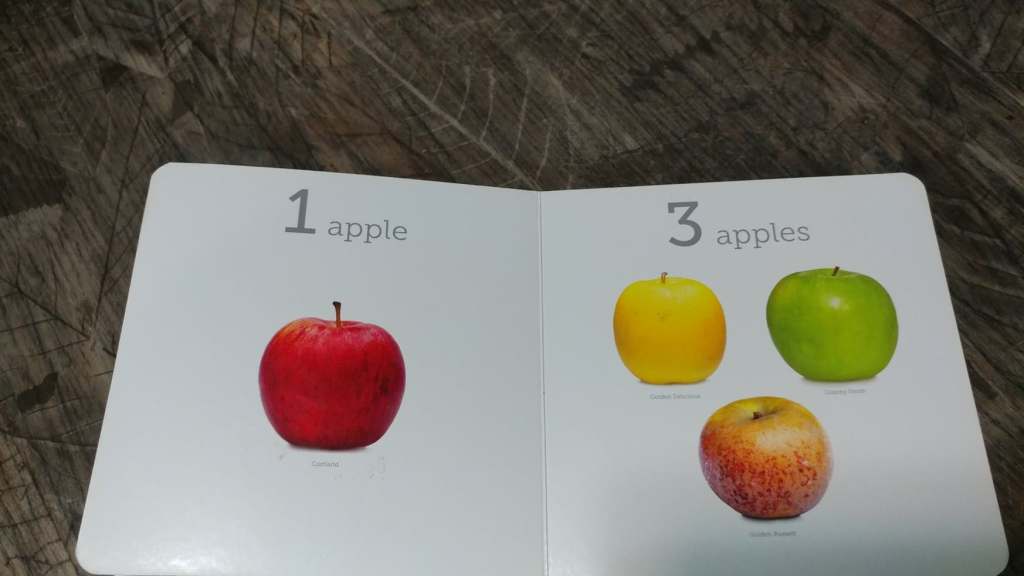
This is a sample of Edible Numbers. The next page will be “1 & 4” then “1 & 5,” you get it. The pictures are easy to point to for counting out loud. I would also read the varieties of produce out loud to Catawba-Lynn as well. Yes, when she was an infant, she became board and restless with the actual names (after I read it to her for the 15th time!), but now she understand that there are different types of apples and carrots and will appease me and sit through my babbling of the names.
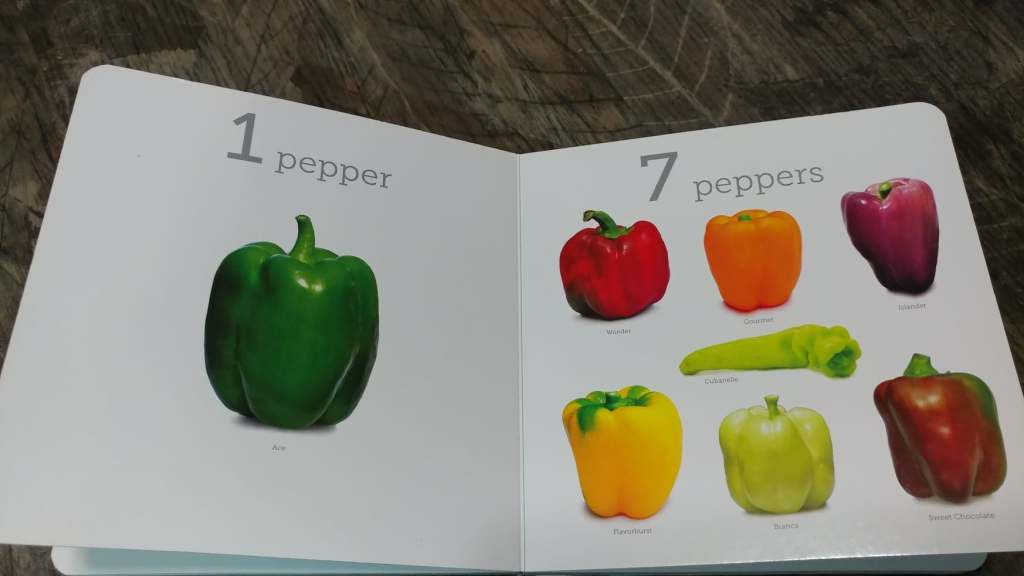
Quick statement – because Catawba-Lynn and I read this book over and over again, I was not shy to purchase and try the different colored peppers at our local farmers’ market, even without asking for clarification of what was odd or off about the bell pepper (different color). I purchased what looked like a Bianca and a Sweet Chocolate (both pictured) and was very excited to try them! Did not disappoint!
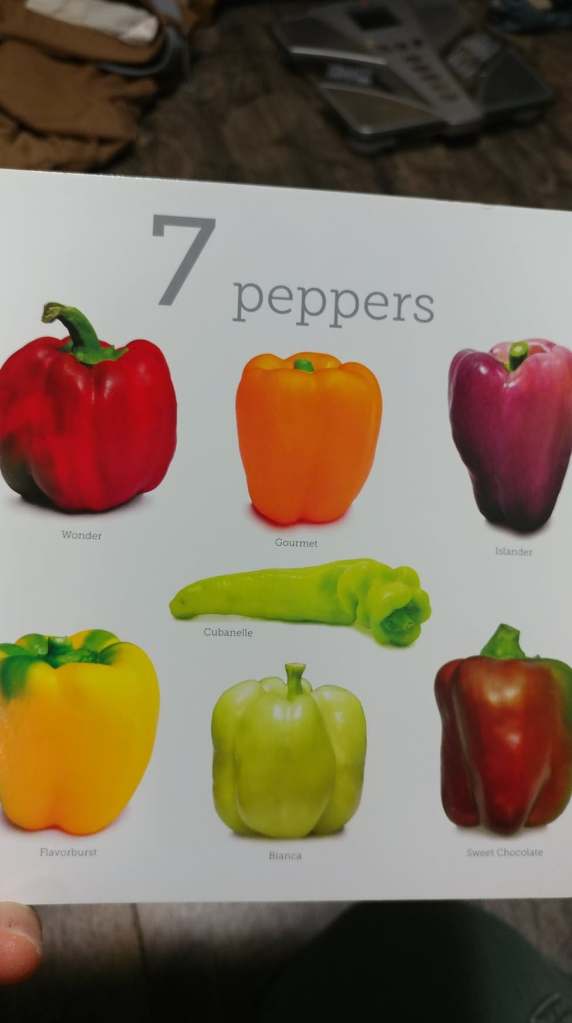
Last quick note about bell peppers…
My husband HATED bell peppers. Hated them! I purchased green bell peppers and cooked with them constantly. We were both in the process of losing weight, bell peppers have 12 calories per 100 grams, if you don’t have a scale, you can guestimate eating a whole bell pepper is about 24 calories (without adding sauce, oil or butter) and so they were frequently featured. Aldi had a sale on colored bell peppers (which I get very excited about) so I bought them. Luke (husband) tried them and didn’t quite like them, but tolerated them a little better. I was banned from purchasing green bell peppers (I still do some times). Slowly, Luke has learned to enjoy bell peppers, much more than I do, and we got through minimum 3 a week. When we were losing weight, Luke would eat almost one a day, which he called his “filler,” something to put in his stomach when he was hungry without having to worry about too many calories. I do onions almost the same way he does bell peppers. And Catawba-Lynn steals my bell pepper petals (the tops and the bottoms) when I am prepping them in the kitchen, because she enjoys eating them plain.

Here is the start of Edible Colors. “Carrots are orange. They are also purple.” The next page shows an amazing array of different colored purple vegetables.
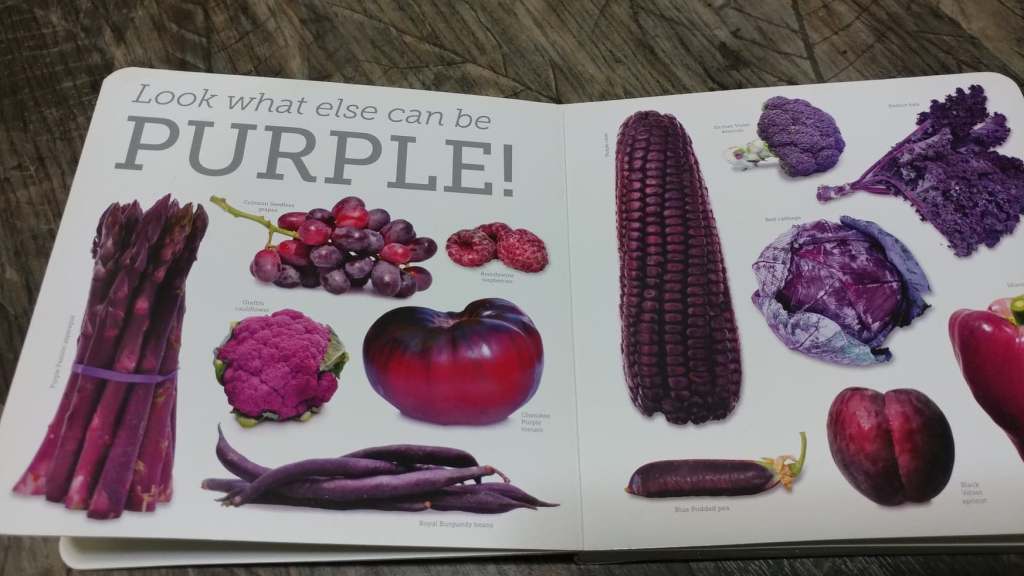
Holy Cow! Beautiful! I didn’t know that asparagus came in a purple variety. Catawba-Lynn and I read this book over and over again and then the family took one of our trips out to Colorado to visit family and Sprouts was selling Graffiti Cauliflower! I had to purchase it and try it, and it was good! I purchased 3 heads of cauliflower that week for munching on, because they had more then just purple cauliflower there, so needless to say I had a bit left over after the trip. When we got home, I made a vegetable soup out of the leftover vegetables and just like with other produce that donates some of there coloration to the broth, the colored cauliflower shed some of its color and dyed my soup!
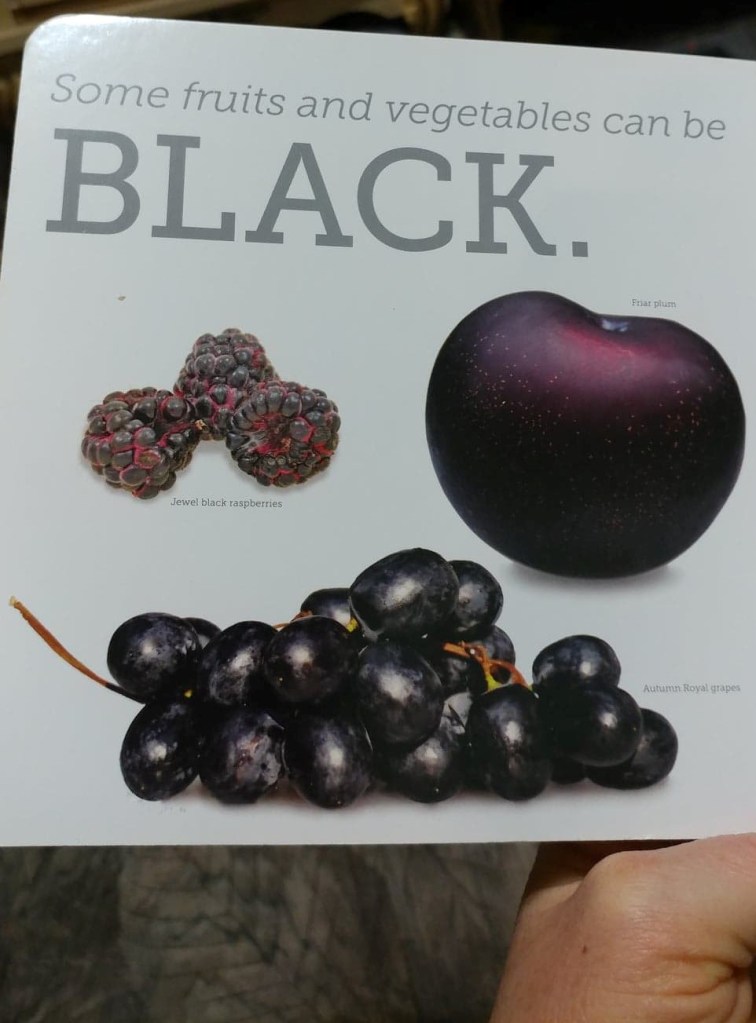
That concludes my sharing of children’s books. If you have kids or grandchildren, look in to these books. If you cannot find these exact books, still go to the library and borrow vividly colored produce books. No kids in your life? Take them out from your library anyway! I have found that ready some children’s books can entertain me as well as Catawba-Lynn!

Buying Produce, A Greengrocer’s Guide to Selecting and Storing Fresh Fruit and Vegetables by Jack Murdich is an excellent book (with no pictures). This books copyright is 1986. I was born in 1988, making me 31 and making this book older than me. It is so interesting to see how the world has changed in reference to production, shipment, storage, cost, taste and popularity of produce. I have only read through the fruit section of the book and am blown away by then changes that have come in my life time.
The book is set up very well. Murdich writes about 2 main topics, being Fruits and Nuts, and Vegetables and Herbs. The Fruits and Nuts section is further broken down to Deciduous Fruits, Citrus Fruits, Tropical and Subtropical Fruits, Berries, Grapes, Melons and Nuts. The Vegetables and Herbs section is in subcategories listed as: The Cabbage Family, Leafy Greens (for Cooking), Lettuce and Bitter Salad Greens, Salad Fixings, Legumes (Beans and Peas), The Nightshade Family, The Onion Family, Root Vegetables, Mushroom (Fungi), Squash, Other Squash, One-of-a-Kind Vegetables, Oriental Vegetables, Tropical Vegetables, and Fresh Herbs. Each one of these subcategories then explain each vegetable individually, such as the Deciduous Fruits category. Deciduous Fruits are made up by Apples, Apricots, Cherries, Nectarines, Peaches, Pears, Plums and Quince. Since we all know what an apple is, I want to share with you some of the “apple part” of this book. The book starts by saying that apples are an all year fruit, grown on every continent (not Antarctica) in their temperate latitudes. Not until after World War I did the United States start shipping in apples in from the Southern Hemisphere, so apples were not available in the summer before then. In the 1940’s, Cornell University Agricultural College experimented with controlled atmosphere storage, and so apples were able to be stored and used all year long. In 1986, the top 4 varieties of apples were
1) Red Delicious (40% total tonnage of apples produced in the United States)
2) Golden Delicious
3) McIntosh
4) Rome Beauty
*Granny Smith was being introduced and gaining popularity*
The book then talks about each of these varieties and more, making note to say where they are grown, what they look like, what they taste like, when they will be in stores, and in they are popular, a regional favorite, or how to use them.
This is a very well written book. I am enjoying it because even though some of the information is old, as in what to look for in a fruit (our food has changed in 30 years) and what is popular (I don’t think Red Delicious is still #1 in the United States – a Google search states that Gala is the #1 grown apple in the United States, followed by Red Delicious, Granny Smith, Fuji and then Honey Crisp), and when to buy the fruit (berries are found on stores all year now). The book talked about how just recently (recent for 1986), pineapple was a secret, rare treasure from Hawaii! I have only read the fruit section so far, but I am enjoying it. It is fascinating to see all that has changed within my life time. Plus, reading about produce makes me hungry for different kinds of produce.
Another interesting nugget of information – the book reads in the banana section, that bananas are one of the cheapest fruits one can find, being only a couple of cents per pound. I am not old enough to have seen this, but I guess bananas used to be more expensive, due to the way they were harvested and shipped. Murdich explains that before 1964, bananas were harvested, carried on to a boat, shipped and carried off said boat and loaded in to a truck, drove to a store and strung up, in bunches. The store worker would then cut however many bananas the customers wanted off of the bunch. Murdich said this used to be a labor intensive and long job; the loading and unloading of tucks and ships. But now that they are shipping in boxes and crates and lifted and loaded by the use of cranes. Since then, the prices are cheaper for the consumer.

Banana Bunches
I have been enjoying my books and magazines, be in farming, books written for adults or picture books to read to my daughter. They have keep my interest in produce when, due to the season and weather, I would have normally wanted calorie laden gravy type, warm, carbohydrate, comfort foods – and lots of it! Are you reading an informative book or magazine? Let us all know in a comment! Stay tuned for my article of the table top game, Consumption! Have a great one everyone!

 Half A Human